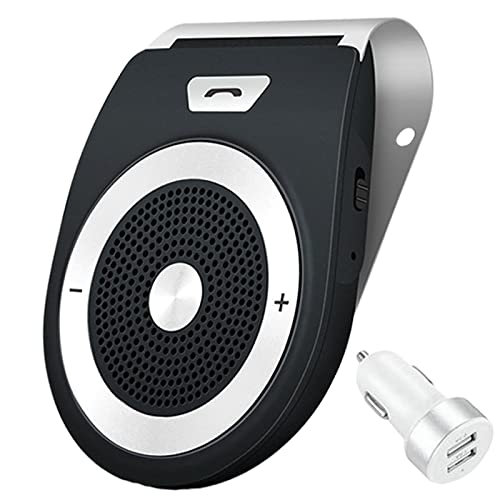
NETVIP Bluetooth Speakerphone with Voice Assistant, Dual Connection
Enhance your driving experience with the NETVIP Bluetooth Speakerphone featuring Voice Assistant and Dual Connection capabilities
Product information
$24.99
Product Review Score
4.77 out of 5 stars
224 reviewsProduct links
In recent years, we have witnessed a revolutionary shift in the way we drive and commute. With the rise of connected cars, our vehicles are no longer just machines. They have become intelligent, data-driven companions that are transforming the transportation industry as we know it.
Connected cars, also known as smart cars, are cars equipped with internet connectivity and a plethora of advanced sensors and systems. These interconnected vehicles have the capability to communicate with each other, access real-time data, and interact with the wider transportation infrastructure. This integration enables a seamless and efficient flow of information, leading to safer roads, reduced congestion, and enhanced overall driving experiences.
The benefits of connected cars are far-reaching. For instance, with vehicle-to-vehicle (V2V) communication, cars can transmit important information like speed, location, and direction to nearby vehicles, greatly improving accident prevention and traffic management. Furthermore, connected cars can leverage vehicle-to-infrastructure (V2I) communication to receive real-time updates on traffic conditions, construction zones, and weather, allowing drivers to make informed decisions and choose the optimal routes.
Another game-changing aspect of connected cars is their integration with the internet and various personal devices. Through smartphone apps or other interfaces, drivers can remotely control and monitor their vehicles, check fuel levels, locate parking spaces, or even request roadside assistance. Additionally, advanced features like predictive maintenance can automatically schedule servicing, ensuring the longevity and reliability of our vehicles.
Embracing Connectivity: How Cars are Becoming Smart
In today's fast-paced, technology-driven world, it should come as no surprise that our cars are becoming increasingly connected. The rise of connected cars is revolutionizing transportation as we know it, offering a plethora of benefits and transforming the driving experience for users worldwide.
Connected cars utilize advanced onboard technology to provide an array of features and services that enhance convenience, safety, and efficiency. These vehicles are equipped with internet connectivity, allowing them to communicate with other devices, networks, and even infrastructure. This connectivity opens up a world of possibilities, enabling cars to access real-time traffic information, weather updates, and mapping services, ensuring drivers reach their destination more efficiently while avoiding jams or hazardous conditions.
Beyond navigation, connected cars also bring a higher level of safety to the road. With sensors and cameras constantly gathering data, these vehicles can preemptively alert drivers to potential dangers, such as lane departure or fatigue, helping to prevent accidents. In the unfortunate event of a collision, these vehicles can automatically notify emergency services, ensuring swift response times and potentially saving lives.
Moreover, the connectivity of cars extends beyond safety to include convenience features that simplify everyday life. From voice-activated controls and in-car entertainment systems to remote access and smart home integration, connected cars seamlessly integrate with our digital lives. Imagine pre-setting your car's temperature via a smartphone app or remotely locking your doors when you realize you forgot to do it before stepping out - connected cars make these possibilities a reality.
Enhancing Safety and Efficiency: The Power of Connected Cars
Imagine a world where your car communicates with other vehicles, traffic signals, and even pedestrians, all in real-time. This is the future of transportation - the era of connected cars. Through the integration of advanced technologies and the internet, connected cars are revolutionizing the way we drive and transforming our journeys into safer and more efficient experiences.
One of the key benefits of connected cars is their ability to enhance safety on the roads. With the help of sensors and wireless communication systems, these intelligent vehicles can detect potential collisions, sudden braking, or other dangerous situations, and alert both the driver and nearby vehicles. By instantly sharing crucial information, connected cars are reducing the risk of accidents and enabling drivers to take preventive measures in time. This technology is particularly promising in crowded cities where the roads are filled with various vehicles, pedestrians, and cyclists - accidents can be prevented by simply alerting all parties of each other's presence.
In addition to safety, connected cars also significantly improve the efficiency of our transportation systems. By analyzing real-time data on traffic conditions, weather patterns, and road infrastructure, these vehicles can optimize routes and suggest alternative paths to avoid congestion. Connected cars can adjust their speed to maintain a smooth flow of traffic and reduce fuel consumption, leading to faster and more eco-friendly journeys. Moreover, by allowing drivers to reserve parking spaces in advance or guiding them to available spots, connected cars are minimizing the time wasted in searching for parking, contributing to less traffic congestion and frustration.
Transforming the Driving Experience: The Future is Here
The driving experience as we know it is undergoing a revolutionary transformation with the advent of connected cars. Gone are the days of simply getting from point A to point B; now, our vehicles are becoming the ultimate smart devices, offering a plethora of features and benefits that make our journeys safer, more efficient, and more enjoyable than ever before.
One of the most remarkable advancements in connected cars is their ability to communicate with other vehicles and infrastructure. This vehicle-to-vehicle (V2V) and vehicle-to-everything (V2X) communication allows cars to exchange vital information, such as speed, direction, and braking, in real-time. This means that drivers can be alerted about potential hazards or accidents before they even come into view. Additionally, connected cars can receive up-to-date traffic and weather reports, helping drivers navigate the roads more efficiently and safely.
But it doesn't stop there. Connected cars are also transforming the way we interact with our vehicles. With advanced voice recognition technology, drivers can use their voice to control various features, including navigation, media playback, and climate control. This hands-free interaction minimizes distractions and improves overall safety on the road. Furthermore, connected cars can seamlessly integrate with our smartphones, allowing us to make calls, send messages, and access our favorite apps, all while keeping our focus on the road.
As we look to the future, the possibilities for connected cars seem limitless. Imagine a world where our vehicles can autonomously navigate through traffic, freeing up our time and reducing congestion. Picture a car that can detect when its driver is tired or distracted, and takes control to prevent accidents. With continuous advancements in artificial intelligence and Internet of Things technologies, these futuristic features may soon become a reality, promising a truly transformative driving experience for all.